

Overview
Karigars are the heart of a boutique. Managing them well means paying fairly and on time, giving clear work with due dates, checking quality before the client sees it, tracking work that goes outside, and keeping simple attendance records. Most fights and delays come from unclear numbers: who did what, how much is owed, and when it was promised. This guide covers each part.
Piece rate, salary or a mix?
Piece rate
The karigar is paid per garment or per stage, for example a fixed rate for a simple blouse, a higher rate for a princess-cut blouse, and a separate rate for embroidery.
- Good for: busy seasons, speed, fair pay for faster workers, part-time or home-based karigars.
- Watch out for: rushing at the cost of finish, disputes over which rate applies, and karigars avoiding hard pieces.
- Make it work: write a rate card for every garment type and stage, and record every piece against the karigar’s name the day it is done.
Monthly salary
A fixed amount each month, usually with set hours.
- Good for: loyal, skilled staff like a head master, careful bridal work, training juniors.
- Watch out for: low output in slow months and no reward for extra effort.
- Make it work: track attendance and output so you know what you get for the salary.
A mix
Many boutiques pay a base salary plus piece rate above a target, or a salary with a festive bonus after Diwali or the wedding season. This keeps income steady and still rewards effort.
Whatever you choose, make sure it follows your state’s minimum wage rules, and put it in writing, even if just a simple note signed by both of you.
Assign every garment to a named person
“Someone will do it” is how blouses go missing. For each order:
- Break it into stages: cutting, stitching, embroidery or handwork, finishing, pressing.
- Assign each stage to one person.
- Give each stage a due date that leaves room before the trial.
- Keep the fabric, measurement slip and design reference together in one labelled bag.
A simple board on the wall with columns like “To cut”, “Stitching”, “Handwork”, “Finishing” and “Ready” works well. Each garment moves across as work is done. It shows at a glance who is overloaded.
Track work and time
Tracking is not about distrust. It helps you:
- Pay piece rates correctly without arguments.
- See who is faster at which work, so you assign better.
- Know your real labour cost per garment for pricing.
- Spot when one karigar is overloaded before a delivery slips.
Note each finished piece and stage against the karigar’s name, every day. Some boutiques also record time spent on long handwork jobs, which helps price bridal work.
Quality checks before trial
Check every garment before the client sees it. A short checklist:
- Measurements match the order slip
- Seams straight, even and finished inside
- Lining flat, not pulling
- Hooks, zips and dori working
- Embroidery and buttons secure
- No chalk marks, loose threads or stains
- Pressed and folded properly
If a piece fails, send it back to the same karigar with a clear note. Keep a record of repeat issues and talk about them privately and calmly. Praise good work in front of others.
Outside job work and contractors
Most boutiques send some work out: embroidery, aari or zardozi, dyeing, smocking, or extra stitching in busy months. This is where garments get delayed or lost.
- Write down what went out, to whom, on which date, and the agreed price.
- Give a challan or written slip with each send-out, and get it signed.
- Agree the return date and follow up two days before.
- Check the work when it comes back, before paying.
- Keep a running list of dues to each job worker so you pay correctly.
Attendance and leave
For salaried staff, simple attendance avoids arguments at month-end. Mark present, absent, half day and leave every day. Agree leave rules in advance, especially around weddings and festivals in the karigar’s own family, which often fall in your busiest season too. Plan for it.
Paying on time
Nothing builds loyalty faster than pay on the promised date. Good practice:
- Fix a pay day and stick to it.
- Give a written or digital slip showing pieces done, rates, advances deducted and the final amount.
- Record advances and loans clearly, with an agreed recovery plan.
- Pay piece-rate karigars weekly or fortnightly if they prefer, since many depend on regular income.
Common mistakes
- Verbal piece rates that both sides remember differently.
- No record of advances.
- Assigning a bridal order to whoever is free instead of the right person.
- Sending work out without a written slip.
- Paying late during the season when cash is tight, which is exactly when karigars are most likely to leave.
Using software to keep it organised
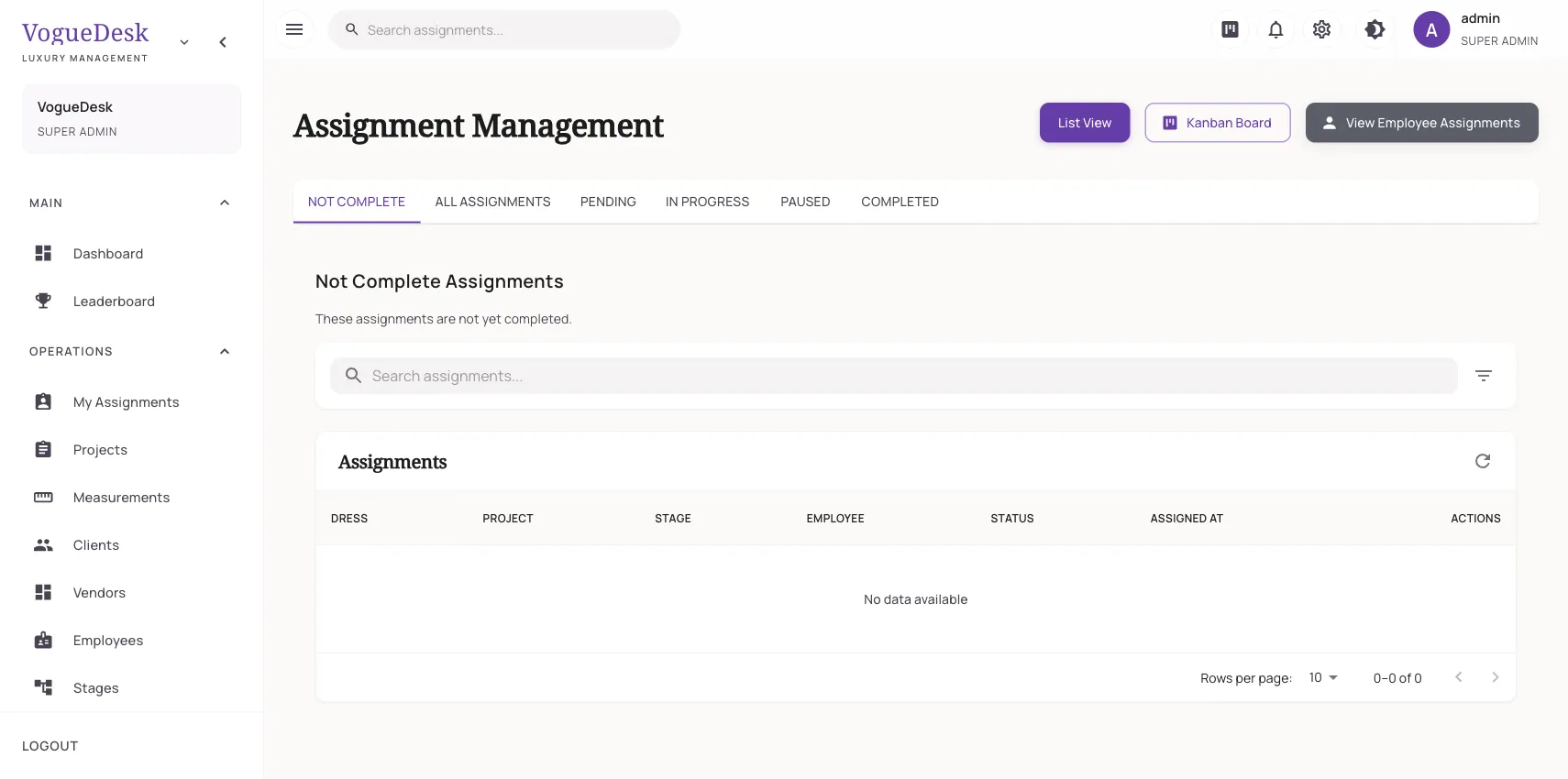
When you have more than two or three karigars, paper registers get messy. VogueDesk has an assignments board for moving garments through stages, time tracking, piece-rate pay worked out from completed tasks, and a leaderboard. Attendance (present, absent, leave, half day) and payroll with advances and loans are in the attendance and payroll module, and outside contractors get their own jobs, agreed prices, send-out and receive tracking, dues and job-work challans. Assignments, payroll and job work are part of the Studio plan, which covers 10 logins (attendance starts on Boutique); see the pricing page.
When karigars are overloaded, deliveries slip. Read our guide on how to reduce delivery delays.
Frequently asked questions
Is piece rate or monthly salary better for karigars?
Piece rate rewards speed and suits uneven work like wedding season peaks. Salary gives steady income and loyalty, and suits work that needs care. Many boutiques use a mix: a base salary for regular staff plus piece rate or a bonus in busy months.
How do I stop karigars from leaving during wedding season?
Pay on the agreed date every time, keep piece rates fair and written down, give advances when promised, and plan a festive bonus. Karigars talk to each other, so a reputation for honest, on-time pay is your best retention tool.
How should I give advances to karigars?
Record every advance with the date and amount, agree how it will be recovered, and deduct it in clear parts from future pay. Show the karigar the balance each time so there is no confusion.
How do I check the quality of a karigar's work?
Use a short checklist before every trial: measurements match, seams are straight and finished, lining sits flat, hooks and zips work, embroidery is secure and the garment is pressed. Note repeat problems and talk to the karigar privately.
Do minimum wage laws apply to karigars?
Minimum wage rules are set by each state and can cover tailoring work. Rates and coverage differ, so check your state's labour department notification or ask a CA or labour consultant.