

The register has served you well
For generations, a darzi’s shop has run on two books: the order register with a number, a name, the cloth and the date, and the naap book with every customer’s measurements. A good master can open the right page in seconds. Many shops still work this way, and there is nothing wrong with it while the shop is small.
The problems show up slowly. Pages tear. An old customer comes back after two years and the book from that year is at home. A son takes over and cannot read his father’s shorthand. During the wedding season, the register has forty open orders and nobody can see at a glance which are due tomorrow. And the customer’s call, “kapde tayyar hain?”, means flipping pages while she waits.
What changes, and what stays the same
Moving to a darzi app does not mean changing how you stitch. It means changing where you write.
| In the register | In VogueDesk |
|---|---|
| Slip number and name | Customer profile with phone and address |
| Naap written on a page | Dated measurement set with about 30 fields |
| “Kurta-pajama, 2 jodi, 15 tareekh” | One order with each garment and a delivery date |
| Advance written in the margin | Advance on the order, deducted from the bill |
| Tick mark when delivered | Status changes to ready, then delivered |
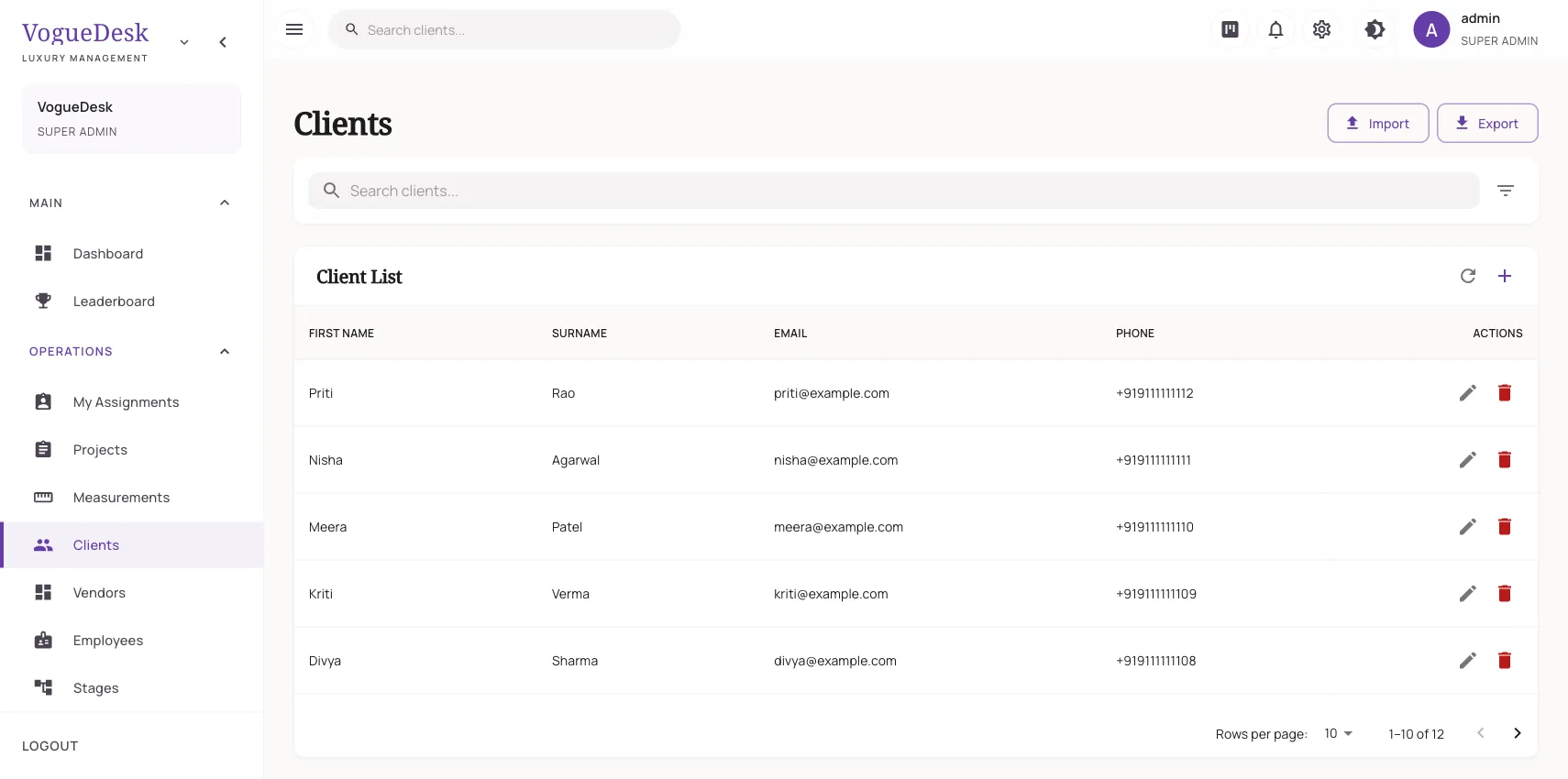
| Finding a page | Search by name |
Your cutting style, your master and your karigars stay the same. You can even note the preferred master on each measurement set, the way some shops write the master’s initials in the book.
Moving over without stopping work
Do not try to copy the whole register in one weekend. A gentler way:
- Week 1: Enter only new orders. Keep the register running alongside.
- Week 2: As regular customers come in, add their naap from the book.
- Week 3: Start using the 30-day delivery list on the dashboard instead of scanning the register.
- After a month: Use the register only for old orders still open.
If someone in the family has already typed measurements into Excel, save the sheet as CSV and import it in one go.
Things the register could never do
- Search any customer in seconds.
- Share a tracking link on WhatsApp so the customer checks progress herself.
- Send automatic messages when an order is ready, if you connect a WhatsApp Business number.
- Assign work to each karigar, who marks it done on his own phone.
- Show who owes money on one screen.
- Survive a lost book or a monsoon leak, since the data is stored online.
See how VogueDesk compares with the notebook register in more detail.
On the phone you already have
VogueDesk runs in the browser on Android phones and iPhones, so there is nothing to install from a store. Field names are simple, like chest, waist and sleeve length, and the notes box takes whatever you type. For more on using it at a busy counter, read the tailor app page; for the money side, the silai app page covers silai ka hisab.
Cost
Start on the Free plan at ₹0 for one login and 30 orders a month, with unlimited customers, to see whether it suits you. For a working darzi shop, Boutique at ₹499/month + GST covers 3 people and 300 orders a month, and every new account gets a 14-day free trial of Studio with no card. See pricing.
Frequently asked questions
How can a darzi keep customer records digitally?
Make one profile per customer with their phone number, save their measurements as a dated set and create each order with a delivery date. Start with regular customers and new orders, and copy the old register over slowly.
Do I have to type my whole old register into the app?
No. Start with today's orders and your regular customers. If your old measurements are in Excel, save the sheet as CSV and VogueDesk can import it, and an import analyser matches your columns to its fields.
What if my phone is lost?
Your data is stored online, not only on the phone, so you can sign in from another phone or a computer. That is one big difference from a paper register.
Is darzi software difficult for an older tailor?
The daily steps are few, find the customer, add measurements, book the order, mark it ready. Many shops have a younger family member set it up, and the darzi then uses only those few screens.
Is it darzi or darji?
Both spellings are used across India for a tailor. Darzi is common in Hindi and Urdu, and darji in Gujarati and Marathi.
Last updated 31 October 2026.