

Bhopal’s gold-thread tradition
Bhopal is known for zari-zardozi, embroidery in gold and metallic thread, and especially for the Bhopali batua, a small drawstring purse covered in zardozi and beadwork. The Government of India’s handicrafts office lists Bhopal zardozi as a recognised craft, and the narrow lanes of Chowk Bazaar in the old city are where many batuas and zari pieces are still sold. Nearby, the Sunpura cluster in Vidisha district also makes zari batuas.
For a boutique that uses this work on bridal suits, lehengas and dupattas, the embroidery often happens outside the shop, by skilled hands that work at their own pace.
Who does what, written down
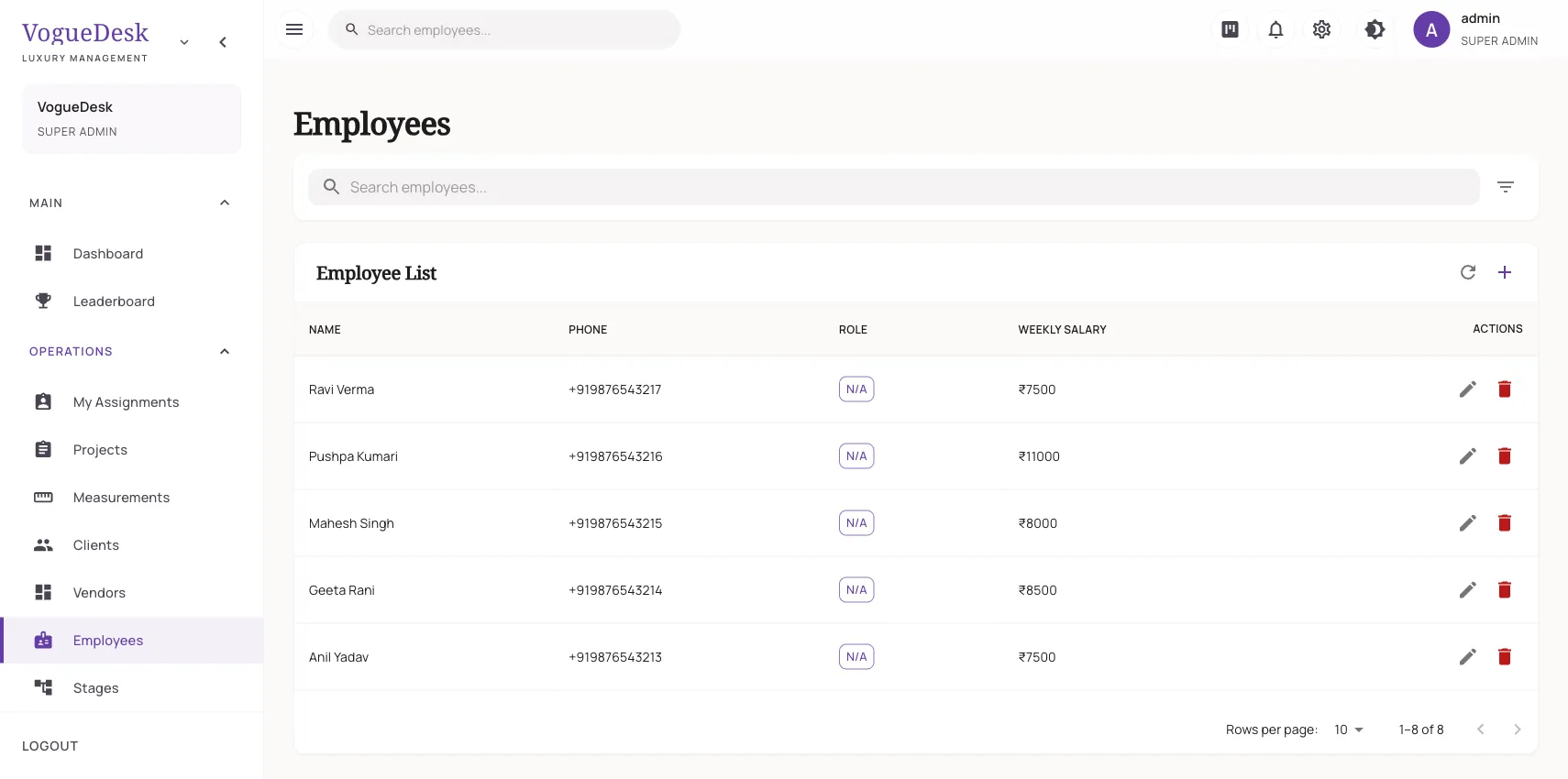
The first step is knowing your people. In VogueDesk each employee has a profile with skills and specialization, a salary structure and attendance. Each outside worker is a contractor with their own jobs and dues.
Then every order is broken into garments and stages. A Bhopal bridal order might look like this:
- Kurta / kameez: cutting by the master, stitching by an in-house karigar
- Dupatta: zardozi by an outside karigar, finishing in-house
- Matching batua: made by a zardozi worker as a separate garment in the same order
Each piece moves through your stages, and the order page shows where everything is.
Outside zardozi karigars
Use the job-work tracker for anything that leaves your shop:
- Create a contractor job with the agreed price.
- Raise a job-work out challan and mark the piece sent.
- Mark it received when it returns, with a job-work in challan.
- Record payment and see remaining dues.
Contractors count in your capacity, so the delivery date estimate reflects how much handwork is already out.
Wedding season and Eid
Bhopal’s wedding months and Eid bring heavy orders for embroidered suits, shararas and lehengas. Before confirming dates, check the capacity calendar and the delivery estimate. Use the Gantt chart to see orders against delivery dates, and the dashboard for everything due in the next 30 days.
Show the work
Zardozi sells by sight. Keep photos of your designs in the style and fabric catalog, under types like suit, lehenga, saree and blouse. Clients can also upload their own reference photos through the client portal.
Fair pay for in-house karigars
The assignments board shows each karigar their own tasks. A karigar’s piece rate is multiplied by the tasks they complete, so per-piece pay is clear. Monthly payroll, salary advances with repayment and attendance (including biometric machines that use the iClock protocol) are built in. See karigar management.
Hindi and Urdu WhatsApp
Connect your own WhatsApp Business number through Meta. Keep templates in Hindi, Urdu or English. VogueDesk sends order created with a tracking link, ready, delivered and payment received messages. Read WhatsApp for boutiques.
GST
Add your GSTIN. Invoices for Madhya Pradesh clients carry CGST and SGST, and other states get IGST, with HSN codes from the master.
VogueDesk is online and works anywhere in Bhopal. Try Studio free for 14 days on the pricing page.
Frequently asked questions
Can I record which karigar is good at zardozi and which at stitching?
Yes. Each employee profile has skills and specialization, so you can assign embroidery stages to the right person.
Some zardozi work is done by women at home. How do I track it?
Add each worker as a contractor, record each piece and agreed price, and mark it sent and received. VogueDesk tracks dues and payments, with job-work challans.
Can WhatsApp messages be in Urdu?
Yes. Choose the language for each Meta-approved template, so Urdu, Hindi and English versions are possible.
Can I show my batua and embroidery designs to clients?
Yes. Add photos to the style and fabric catalog and share them when a client is choosing.
Does VogueDesk have a Bhopal office?
No. VogueDesk is online only, with no office or local partner in Bhopal.
Last updated 31 October 2026.